



Complementry Defensive System
The defensive network associated with Santa Teresa Fortress extended beyond its walls, forming part of a broader colonial system designed to control strategic coastal routes in the South Atlantic.
Together with Fort San Miguel and the Cerro Fortress of Montevideo, Santa Teresa formed a chain of military strongholds that reflected the imperial conflicts of the region.
Santa Teresa Fortress
Santa Teresa Fortress was the principal eastern stronghold of this defensive network. Its bastioned pentagonal design, granite walls and strategic inland position made it one of the most important fortifications in the area.
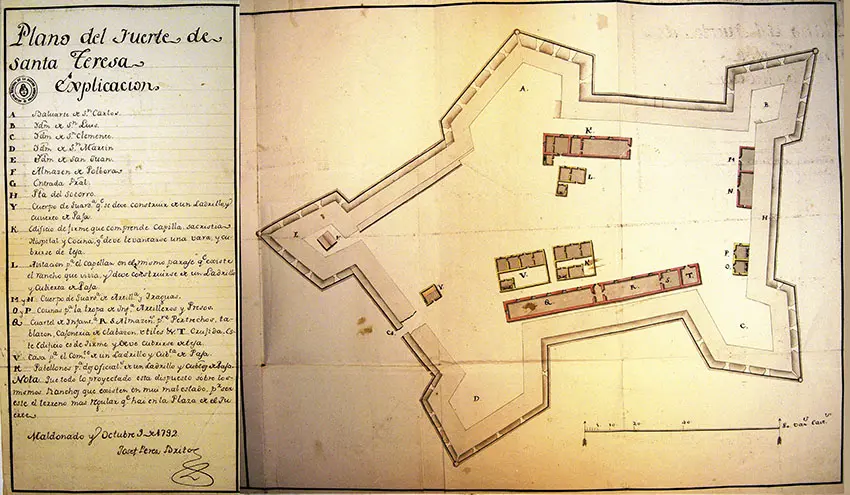
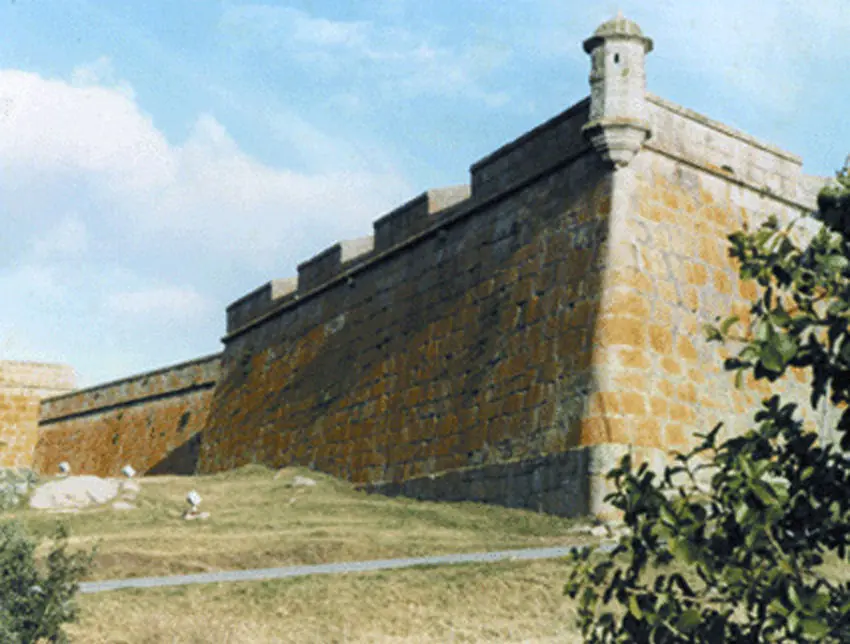
Historic plan of Santa Teresa Fortress (1791)
Wall and bastion of Santa Teresa Fortress
Fort San Miguel
Fort San Miguel, built in 1737, has a square layout with four bastions. Smaller than Santa Teresa, it played an important defensive role near the frontier zone and was declared a National Monument in 1937.
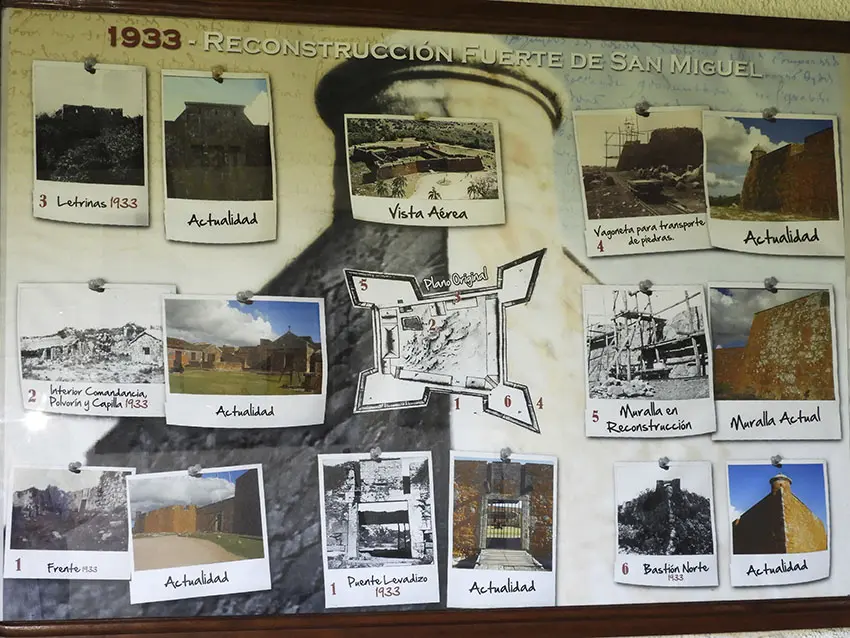
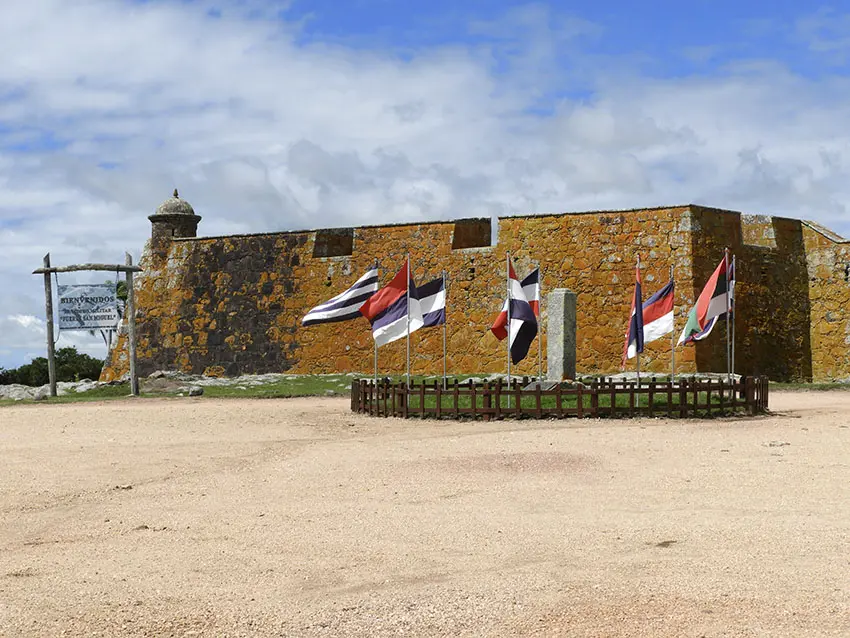
Reconstruction of Fort San Miguel: before and after
Exterior Wall and Federal League Flags
Cerro Fortress of Montevideo
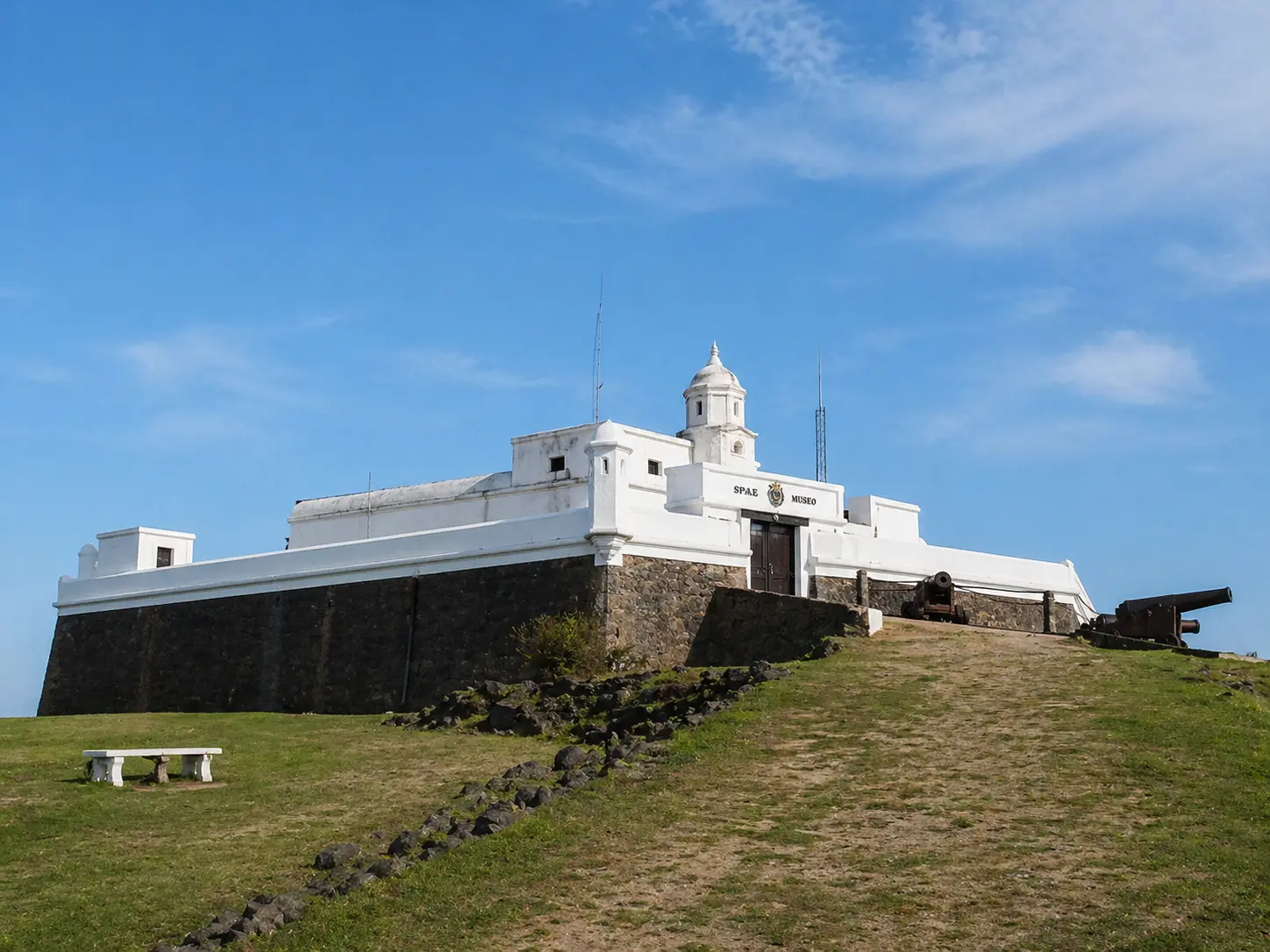
The Fortress of the Cerro of Montevideo, built in 1809, defended the entrance to Montevideo Bay and its port facilities. It was later named after General Artigas and declared a National Monument in 1931.
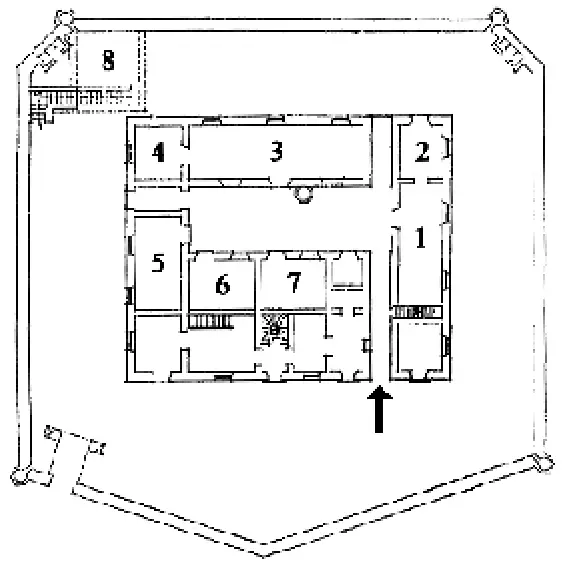
Historic plan of the Cerro Fortress
Exterior view of the General Artigas Fortress Museum
Together, these three fortifications preserve the memory of Uruguay’s colonial defensive system and its strategic role in the South Atlantic.