



Reconstruction of Fort San Miguel
Fort San Miguel was built by the Portuguese in 1737 during the dispute for control of the Angostura land passage, the only accessible route near the Atlantic coast. Its mission was to monitor and secure the frontier in a territory shaped by imperial conflict.
During the 20th century, the fort underwent an important reconstruction and preservation process promoted by Horacio Arredondo, whose vision sought to recover not only the military structure, but also the historical and cultural identity of the region.
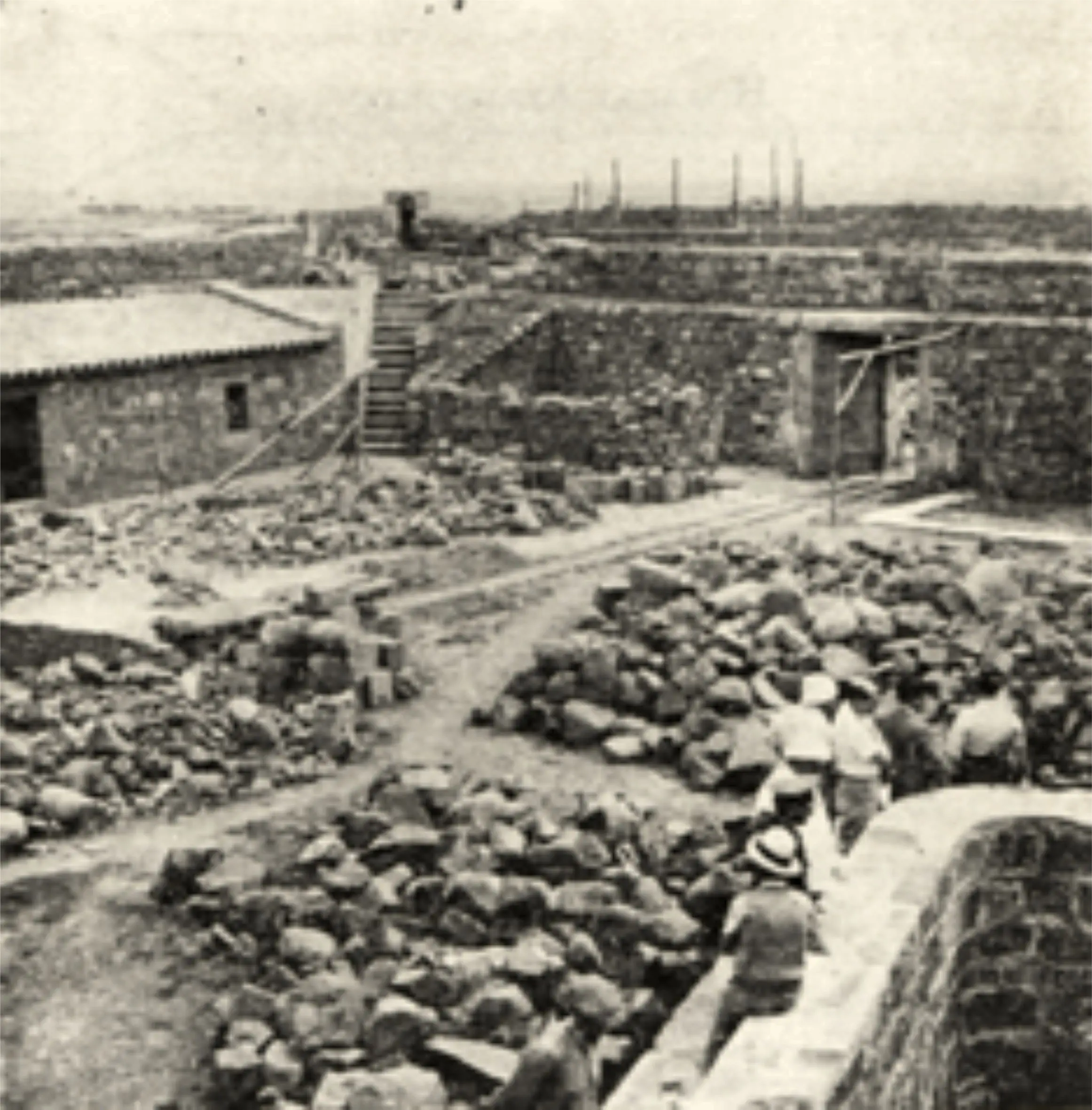
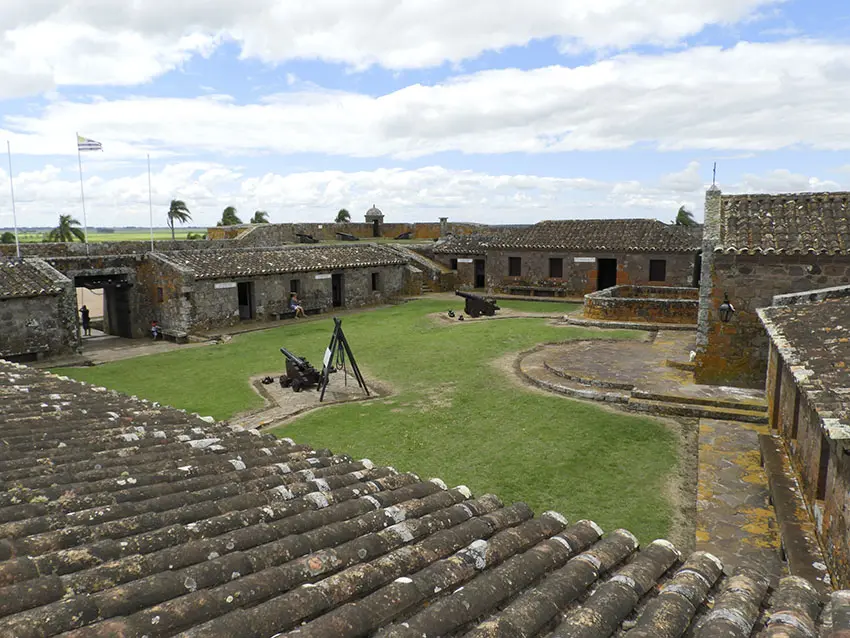
Fort San Miguel during restoration
works in the Plaza de Armas area
Present-day view of the Plaza
de Armas inside Fort San Miguel
As part of this effort, two complementary spaces were created: the Criollo Museum, featuring carts, horse gear and objects related to rural traditions; and the Indigenous Museum, displaying arrowheads and archaeological artifacts found in the region, reflecting the ancestral presence in these lands.
Today, Fort San Miguel is not only a restored fortification, but also a cultural center that brings together military, criollo and indigenous heritage, fulfilling Arredondo’s vision of preserving and revitalizing Uruguay’s historical legacy.