



Reserve of Crioloe Cattle and Sheep in Uruguay
Historical overview
Creole cattle and sheep in Uruguay descend from animals introduced by Spanish and Portuguese settlers during the 16th and 17th centuries.
Today, a reserve of these animals exists in San Miguel National Park, established in the 1930s by Horacio Arredondo during his work on the reconstruction of the Santa Teresa Fortress and Fort San Miguel.
Alongside the reconstruction of the historic Fort San Miguel and the creation of its park, Arredondo proposed an initiative to the President of the Republic, Dr. Baltasar Brum, during his visit to the ruins of the fort in 1920. He suggested:
“What do you think, Mr. President, if we also create a park where only native flora and fauna are present, including primitive cattle and sheep, so they may serve as living witnesses of our livestock evolution?”
The initiative was accepted by President Brum.
In 1931, the National Meat Packing Plant provided him with four cows selected from animals destined for slaughter. On August 7, 1942, in the Aiguá Hills near La Coronilla (Maldonado Department), he acquired eight cows and one bull from a local farmer named Figuerón Soca.
In order to avoid inbreeding, he continued searching and found another small herd in Arroyo Malo (Treinta y Tres Department), owned by a local farmer named Rivero, who initially refused to sell. Arredondo used his ingenuity to obtain the animals: when Rivero sent cattle for slaughter to the butcher shop in Treinta y Tres, Arredondo purchased them there. In this way, he acquired one bull, five cows, and eight cows with calves.
He also gradually assembled a flock of Creole sheep, collecting specimens during his travels throughout the country.
Characteristics of Creole Cattle
- Prominent, striking horns
- Wide variety of coat colors
- Sexual dimorphism, with clear physical differences between bulls (meat type) and cows (dairy type)
- High tail insertion and wide pelvic structure in females
- Strong maternal behavior
- High tolerance to environmental and management changes
- Studies have shown very low parasite loads
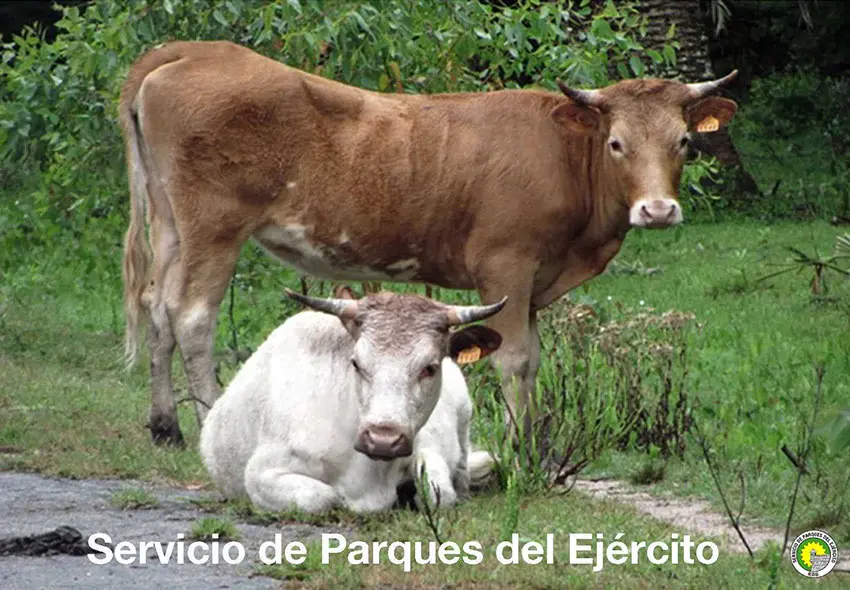
Criollo cattle preserved in San Miguel
National Park, Uruguay
Characteristics of Creole Sheep
- Resistance to parasites (helminths) and foot rot
- Free from mange and lice; the flock requires no routine treatments
- Hardy animals, well adapted to free-ranging conditions
- Ewes breed year-round, typically twice per year
- Lambs show notable vitality
- Highly active, covering large areas while grazing
- Produce a light fleece with long fibers
- Adult females weigh approximately 28–30 kg, males around 40 kg; lambs are born weighing 3–4 kg
- Lean but very flavorful meat
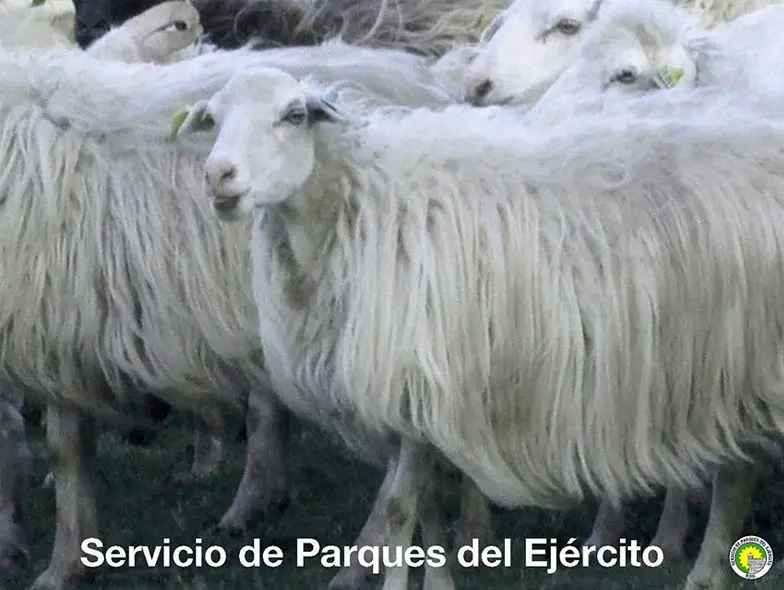
Criollo sheep preserved as part of the
genetic conservation program in Uruguay
Current Conservation Project
Currently, the “Productive Characterization and Conservation of Creole Sheep in Uruguay” project is being carried out by the Faculty of Veterinary Medicine, the Uruguayan Wool Secretariat, the Army Parks Service, and the National Institute for Agricultural Research.
The project is funded under the Global Plan of Action for Animal Genetic Resources of the Food and Agriculture Organization (FAO).
The current herd consists of approximately 600 cattle and 300 sheep.