



Restoration of the Fortress
This gallery includes documented milestones and the presidential timeline related to the long restoration period of Santa Teresa Fortress.
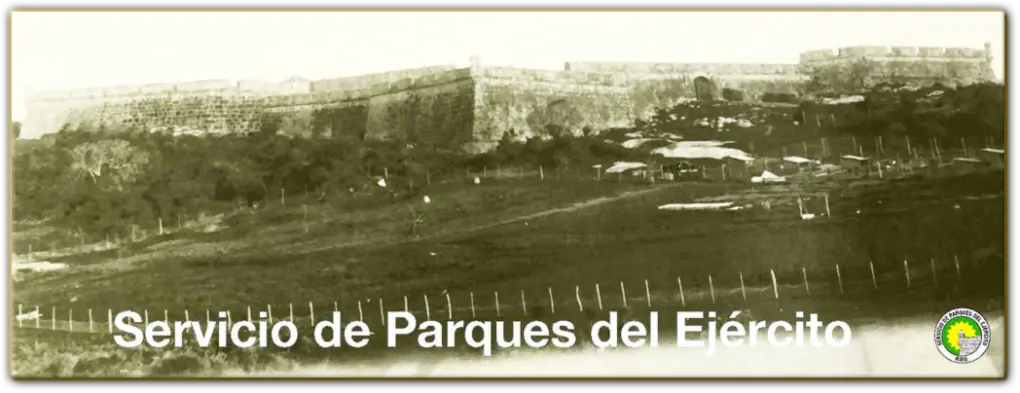
Between 1892 and 1942, the restoration of Santa Teresa Fortress progressed through different stages, closely linked to the political context of each administration.
This gallery presents documented milestones and the presidential timeline related to the long restoration process of Santa Teresa Fortress.
Presidency of Julio Herrera y Obes (1890 - 1894)
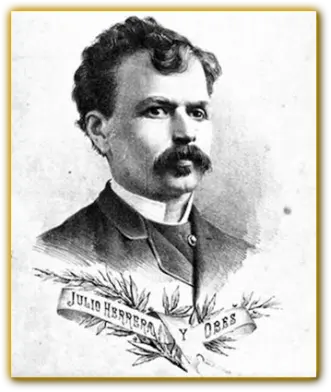
Decree – November 30, 1892
The government allocated funds for the reconstruction in accordance with the plans and technical specifications prepared by the Directorate of Public Works, and a Supervisory Commission was established to oversee these works.
The Santa Teresa Fortress was designated for the custody of prisoners assigned to forced labor, with a military detachment assigned for this purpose. However, due to a change in administration, these measures were not carried out.
Presidency of Juan Idiarte Borda (1894 - 1897)
Decree - April 30, 1895
The decree of November 30, 1892 was ratified, authorizing the reconstruction with military personnel from the frontier and the fencing of the land for Army use.
1897 – Revolutionary events
In 1897, revolutionary forces opposed to President Juan Idiarte Borda destroyed fencing, burned doors and windows, and caused significant damage to the site.
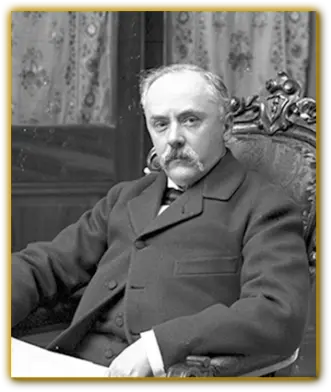
Presidency of Juan Lindolfo Cuestas (1897 - 1903)
Presidency during the period in which the fortress remained under gradual national attention, with no major recorded restoration milestone identified in current archival notes.
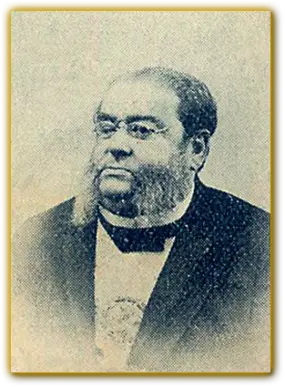
Presidency of José Batlle y Ordóñez (1903 - 1907)
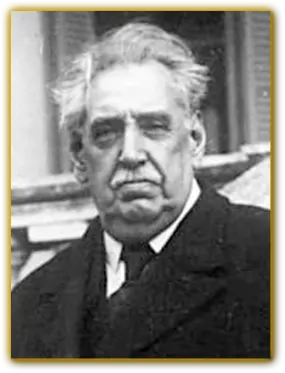
Presidency during a period of state modernization. No specific restoration action is currently identified in the available records.
Presidency of Claudio Williman (1907 - 1911)
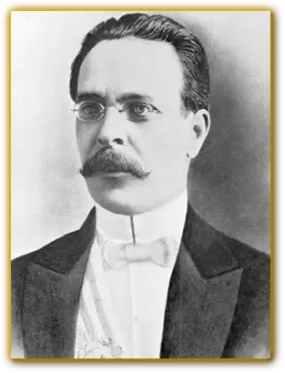
Presidency included in the historical timeline of the restoration era. Further archival detail pending confirmation.
Presidency of José Batlle y Ordóñez (1911 - 1915)
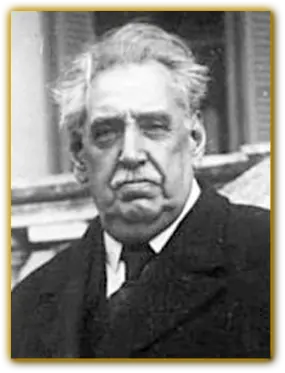
Presidency during the broader modernization period of Uruguay. No specific fortress intervention currently documented in available notes.
Presidency of Feliciano Viera (1915 - 1919)
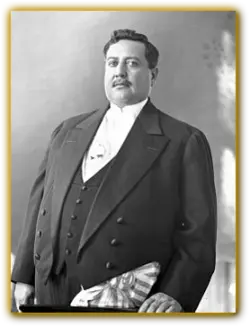
Presidency preceding the administration of Baltasar Brum, within the long restoration timeline of Santa Teresa Fortress.
Presidency of Dr. Baltasar Brum (1919 - 1923)
Horacio Arredondo’s First Visit and the Beginning of Restoration
In 1917, Horacio Arredondo visited Santa Teresa for the first time.
“We made the entire journey overland. The road extended more or less only as far as the Sierra (San Carlos, Department of Maldonado), in front of the station, and from there began a veritable ordeal, made even more difficult by the fact that we were traveling in a powerful but very heavy car (a 50 HP Mercedes-Benz), which constantly became stuck, time and again.
…overcoming great difficulties, as the ‘peludos’ forced us to spend two nights in the open and only one in a hotel, we arrived in Santa Teresa on the third day.”
“The impression the ancient monument made on me was profound. That work of man, which spoke so strongly of his capacity to create, abandoned in the vastness of uninhabited fields, was threatened with being buried by the sands, whose relentless advance seemed very difficult to contain, as the dunes were already rising along its southern flank. Three purposes immediately came to mind: to write its history, to carry out its restoration, and to contain the dunes through appropriate plantings.” (Horacio Arredondo).
To write its history, Horacio Arredondo sought information in national and foreign archives in Argentina (National Archives), Brazil (archives of Rio Grande and Rio de Janeiro), Spain (notably the Archive of the Indies and Seville), and even the British Museum. This was an intense undertaking that took him two years.
1919
Based on the information gathered, Horacio Arredondo succeeded in gaining the interest of the President of the Republic at the time, Dr. Baltasar Brum, who decided to visit the fortress that same year. Dr. Brum became the first sitting president to visit the Department of Rocha.
December 23, 1920
Horacio Arredondo and architect Fernando Capurro submitted a report to President Baltasar Brum regarding the cost of the restoration, estimated at 50,000 pesos, proposing the use of military personnel, among others, to carry out the work.
February 18, 1921
President Baltasar Brum, through a formal message and draft bill submitted to the General Assembly, requested authorization to allocate the necessary funds for the restoration.
January 4, 1923
The First Honorary Commission for the reconstruction of the Santa Teresa Fortress was established, composed of Colonel Architect Alfredo R. Campos, Navy Lieutenant Commander Eduardo M. Sáez, Architect Fernando Capurro, and Horacio Arredondo.
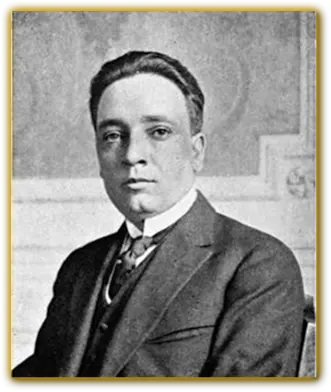
Presidency of Ing. José Serrato (1923 - 1927)
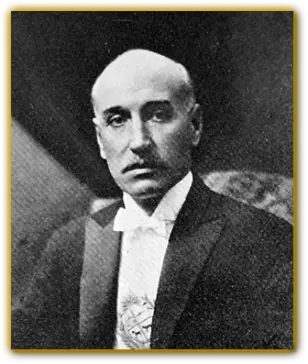
April 10, 1924
The First Honorary Commission was dissolved following the resignation of Horacio Arredondo and Engineer Fernando Capurro.
For nearly four years, Horacio Arredondo had been striving to advance his project.
Presidency of Dr. Juan Campisteguy (1927 - 1931)
December 26, 1927
During the presidency of Dr. Juan Campisteguy, a law was enacted establishing the following provisions:
- The Santa Teresa Fortress was declared a National Monument.
- Its reconstruction and the creation of a park were decreed.
- The Second Honorary Commission was established.
- The Ministry of War was entrusted with the care and supervision of the fortress.
The Second Commission was composed of:
- Colonel Architect Alfredo Baldomir – representing the Executive Branch, serving as President of the Commission.
- Horacio Arredondo – representing the Historical and Geographical Institute.
- Architect Fernando Capurro – representing the Society of Friends of Archaeology.
Capurro later departed for Europe, leaving Baldomir and Arredondo as the acting directors until May 15, 1940, when Capurro formally resigned and was replaced by General and Minister of Defense, Architect Alfredo R. Campos.
1928
At the beginning of this year, the fortress and a 146-hectare tract of land—apparently the full extent of State-owned property in the region at the time—were transferred to the Second Commission.
The first 40,000 trees were planted, and the reconstruction of the Santa Teresa Fortress began.
February 6, 1929
A total of 866 hectares of land were expropriated to establish the Santa Teresa Park. Added to the original 146 hectares, this resulted in a total area of more than 1,000 hectares.
This achievement was the result of the perseverance of the Second Commission and the invaluable support of former President Baltasar Brum. In recognition of this, Horacio Arredondo proposed that the highest point of these lands be named after him, giving rise to what is now known as “Cerro de Brum.”
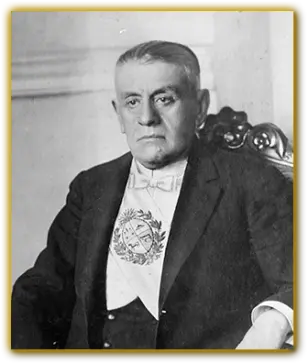
Presidency of Dr. Gabriel Terra (1931 - 1938)
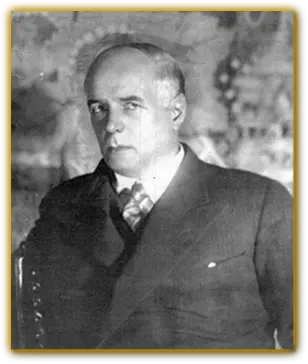
1932
The Second Commission (Baldomir – Arredondo) submitted a report on the first four years of work, detailing the following:
Repairs:
a) Walls, parapets, firing steps and sentry box
b) Drainage systems
c) Embankments and roads
Restoration:
a) Barracks
b) Powder magazine
c) Kitchen and sanitary facilities
d) Chapel
e) Parade ground
f) Underground structures and moats
g) Guardhouse
Presidency of Gral. Alfredo Baldomir (1938 - 1942)
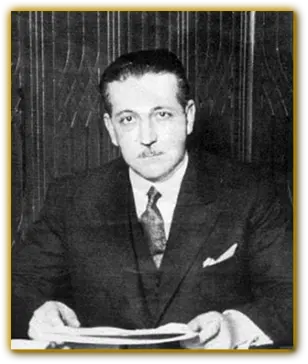
1938 - 1942
The momentum of reconstruction, as well as the design, development and planting of the park, increased significantly, reaching remarkable levels of achievement.
During this period, the most important stage of what is now Santa Teresa Park was completed, including the restoration of the fortress and the formation of the park as a whole.
The restoration of the Santa Teresa Fortress, undertaken between 1892 and 1942, was a long and complex process that spanned decrees, revolutions, honorary commissions, and the determination of figures such as Horacio Arredondo.
Thanks to the political will of successive administrations and the efforts of military personnel, architects, and historians, the fortress ceased to be an abandoned structure threatened by sand dunes and became a symbol of national memory.
Its designation as a National Historic Monument in 1927 marked a turning point.
Decades later, Santa Teresa National Park itself was also declared a National Historic Monument by Resolution No. 298/024 of the Ministry of Education and Culture, published in November 2024.
Since then, the fortress has not only been preserved as testimony of the colonial past, but has also been integrated into a protected natural environment, open to both the community and visitors.
Today, the Santa Teresa Fortress is a living space where history and nature coexist, reminding us that preserving heritage is also a way of projecting identity into the future.